

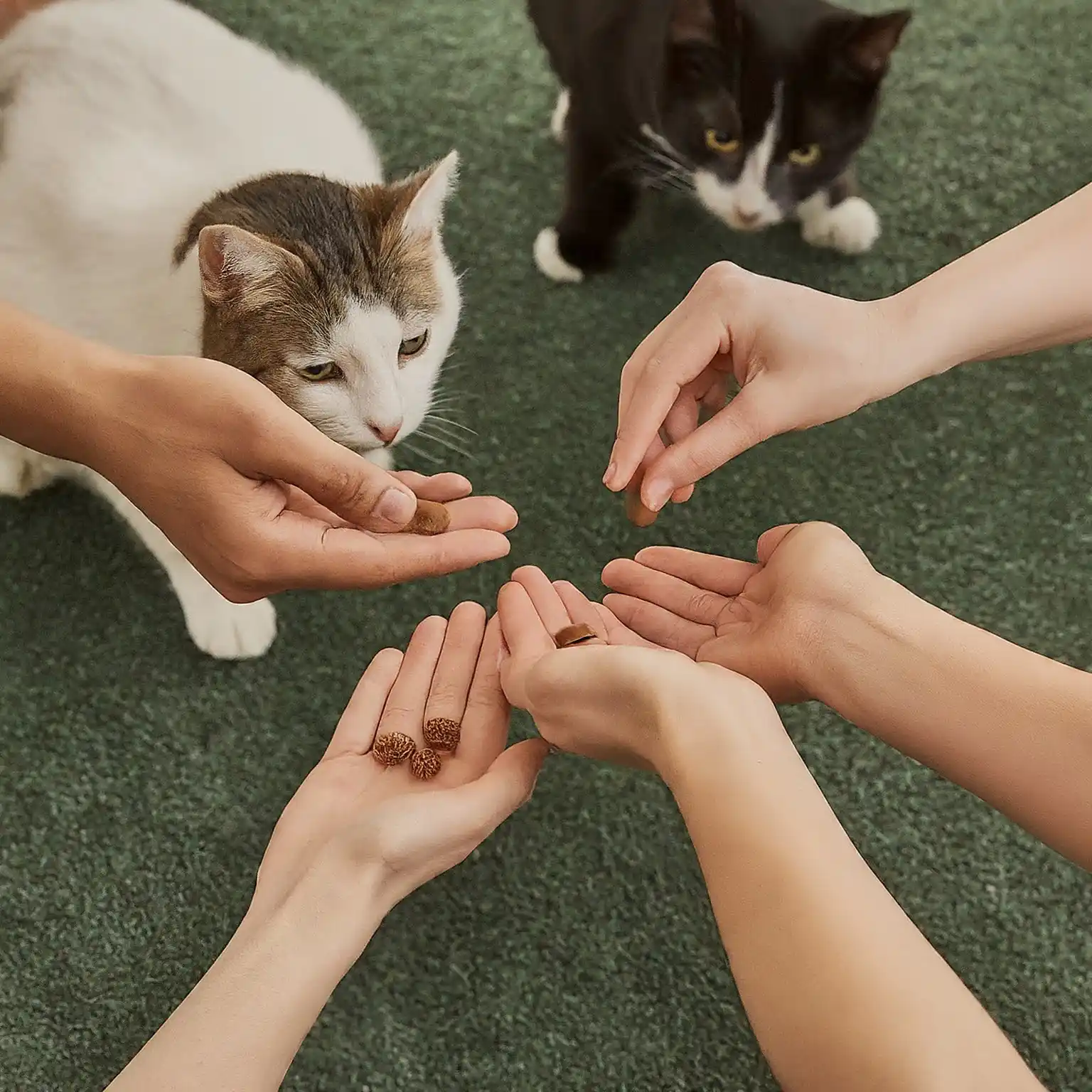
Cat training is not about making a cat act like a dog. It is about helping your cat understand clear, rewarding choices: come to you, step into a carrier, touch a target, use a scratching post, or feel more comfortable with everyday care. The best training is short, calm, and built around what your individual cat enjoys.
Start with one easy skill, reward small successes, and stop before your cat loses interest. If your cat looks frightened, frustrated, unwell, or overwhelmed, pause the session. Training works best when your cat feels safe enough to choose to participate.
The foundations of successful cat training
- Use rewards your cat values. Tiny food rewards, play, access to a favourite spot, or gentle attention may work. Keep food rewards appropriate for your cat’s normal diet.
- Train in a quiet place. Start away from visitors, other pets, loud appliances, and intense window activity.
- Keep sessions short. Several brief successful attempts are more useful than one long session.
- Reward promptly. Give the reward as soon as the behaviour happens so your cat can connect action and outcome.
- Increase difficulty gradually. Add distance, time, or distraction one at a time—not all at once.
- Let your cat opt out. Stop if your cat moves away, hides, freezes, or otherwise looks uncomfortable.
The Feline Veterinary Medical Association’s positive-reinforcement guidance describes teaching skills in small steps and reinforcing behaviours the cat can comfortably offer. Fear, pain, and frustration can interfere with learning, so a worried cat needs relief—not a harder lesson.
Why punishment makes training harder
Yelling, squirting water, chasing, startling noises, or physically forcing a cat away can make them afraid of you or of the situation. They may stop a behaviour while you are present without learning what to do instead. Focus on preventing access to the unwanted reward, offering a suitable alternative, and rewarding the alternative when your cat uses it.
For example, rather than punishing scratching, place a stable scratcher where your cat already scratches and reward its use. Rather than chasing a cat into a carrier, make the carrier part of calm, rewarded practice.

Do you need a clicker?
No. A clicker can be helpful because it marks the precise moment your cat does the right thing, but a calm word such as “yes” can work too. First, pair the marker with a reward: make the sound, then immediately give a reward. Repeat a few times. Once your cat understands the marker, use it to mark the desired behaviour and follow with the reward.
Some cats find a clicker sound unpleasant or startling. If that happens, use a softer marker word or reward the behaviour directly. The tool should make training clearer, not noisier or more stressful.
Four beginner-friendly cat training skills
1. Target training
Target training means teaching your cat to touch a target, such as the end of a target stick or the back of your hand. Hold the target close to your cat’s nose. When they look at, sniff, or touch it, mark and reward. Once that is easy, move the target a small distance so your cat takes a step toward it.
This skill can give you a gentle way to guide your cat to a mat, toward a carrier, or away from a doorway without picking them up or pushing them. Keep it voluntary and reward the approach.
2. Come when called
Begin with your cat nearby in a calm room. Say one cue, such as their name or “come,” once. Reward attention, a step toward you, and then arrival. Gradually practise from a little farther away and in different rooms. Do not repeat the cue until it loses meaning, and do not use it only before something unpleasant.
Recall is an indoor communication skill, not a guarantee of outdoor or emergency safety. Follow our complete guide to teaching your cat to come when called for the full progression.
3. Carrier comfort
Keep the carrier open in a familiar room with comfortable bedding. Reward your cat for looking at it, approaching it, and stepping inside. Do not close the door at first. Build duration slowly, and reserve chasing or forced placement for genuine emergencies only.
Training a cat to enter a carrier voluntarily can make routine travel and veterinary visits less difficult. If your cat has a history of severe fear around the carrier or handling, ask your veterinary team for individual advice.
4. A suitable scratching alternative
Scratching is a normal cat behaviour. Observe whether your cat prefers a vertical post, horizontal board, particular material, and a specific location. Put a sturdy option directly beside the damaged area at first, protect the furniture temporarily, and reward voluntary scratching on the alternative.
Read our detailed guide to stopping cat scratching furniture without punishment for a practical matching-and-placement plan.
Make training easier by reading body language
A cat who is ready to train may approach, investigate, take a reward, and move with a loose body. A cat who crouches, hides, turns away, pins ears back, lashes their tail, or becomes very still may be telling you that the session is too hard or that they need a break. Respecting that communication prevents training from becoming a struggle.
Our cat body language guide explains how ears, eyes, tail, posture, and context work together.
Troubleshooting common setbacks
| Problem | Try this |
|---|---|
| Your cat walks away | Make the step easier, improve the reward, or stop and train later in a quieter setting. |
| Your cat only works for one reward | That is useful information. Use the preferred reward for early learning and keep sessions brief. |
| Your cat seems bored | End on an easy success. Train at a different time, reduce repetitions, or switch to a play reward. |
| Progress has stopped | Go back to the last easy step. Change only one part of the exercise at a time. |
| Behaviour has changed suddenly | Pause training and arrange veterinary advice, especially if there are changes in appetite, movement, grooming, litter-box use, or energy. |
Leash training is optional
A harness is not a requirement for a happy indoor cat. Some cats may tolerate calm, controlled outdoor access; many find a harness or unfamiliar places stressful. If you choose to try it, start indoors, use a cat-specific harness, keep the lead slack, and let your cat decide whether to continue. Our gentle leash-training guide explains how to assess suitability and progress safely.
Frequently asked questions
Can older cats learn new skills?
Yes. Start with an easy, comfortable skill and a reward that matters to your cat. Go at their pace and consider a veterinary check if changes in mobility, comfort, or behaviour make training difficult.
How often should I train my cat?
Short, calm practice sessions work well. The right frequency depends on your cat’s interest; stop while they are still comfortable and successful.
What is the easiest trick to teach a cat?
Target training is often a useful first skill because you can reward a simple look, sniff, or touch and build from there. It also has practical uses beyond tricks.
The takeaway: good cat training is clear, reward-based, and voluntary. Start small, listen to your cat’s body language, and build useful everyday skills one comfortable step at a time.